Every other temple sits at its true compass bearing, but is drawn at the square root of its real distance so nearby neighbours don't collapse into one point; the range rings carry the actual kilometres.
The Secret Buddha Garden (สวนพระพุทธเจ้าลับ), also called the Tarnim Magic Garden, is Koh Samui’s secret garden: a private jungle sculpture park of moss-covered stone statues on Pom Mountain, in the island’s southern interior. Entry is about 80 THB (~2.50 USD), it is open roughly 8:00 AM to 5:00 PM, and most visitors spend 1-2 hours. The last stretch of road is very steep, so a 4x4 or a jeep tour is the safe way up.
The garden is a modern creation with a personal soul. It was the life’s work of farmer Nim Thongsuk, who wanted a physical picture of Buddhist heaven on his family’s land. Weathered statues of deities, angels and mythical animals emerge from the dense tropical jungle, all surrounding a cool, freshwater stream.
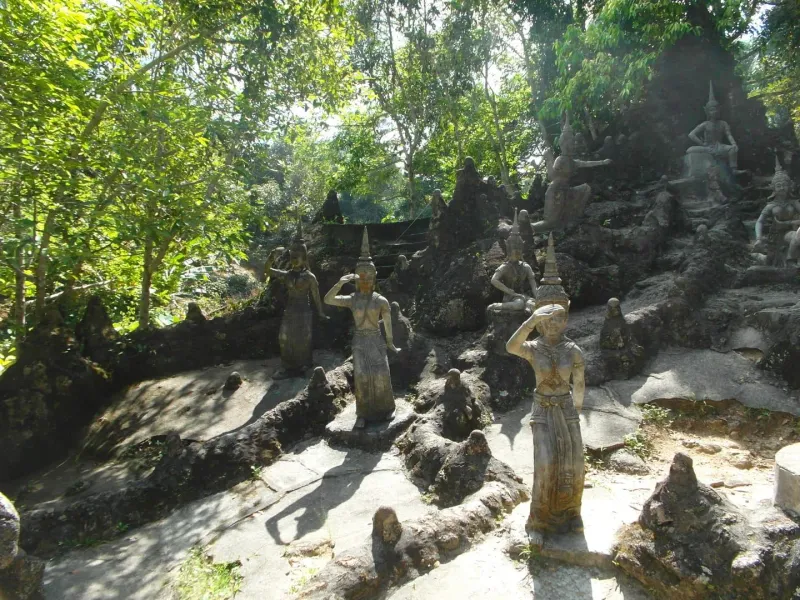
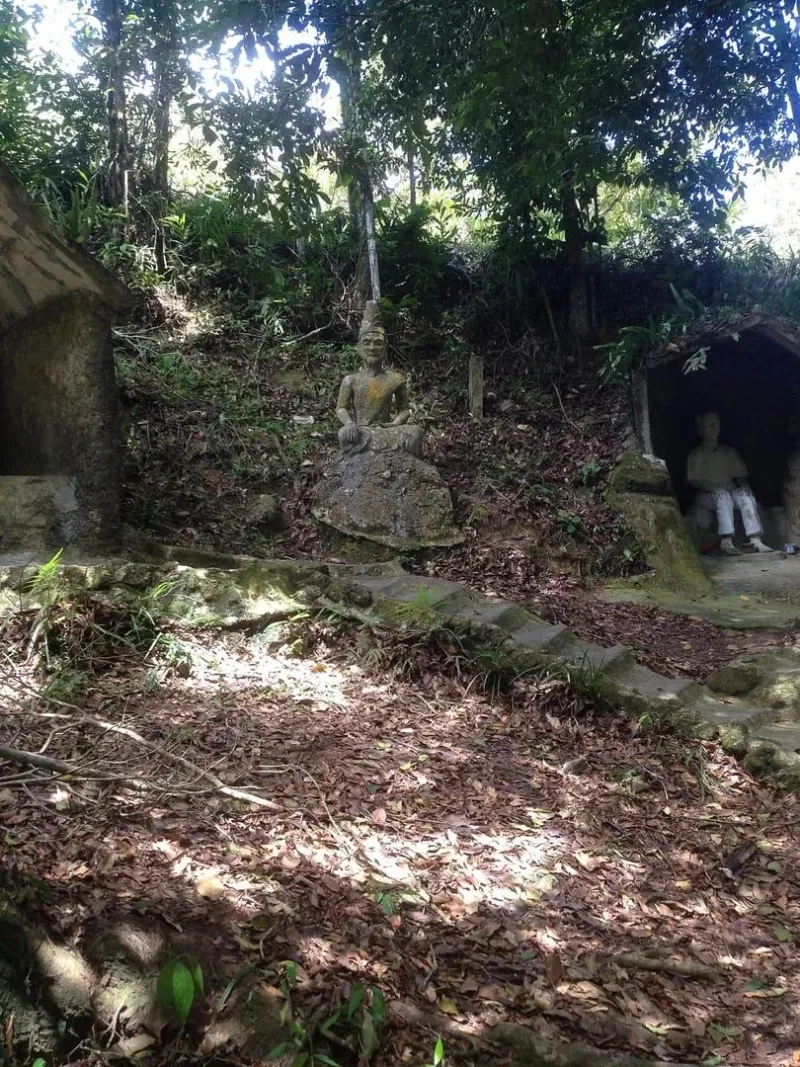
The moss-covered statues of the Secret Buddha Garden blend seamlessly into the lush jungle surroundings.
How Much Is the Secret Buddha Garden, and When Is It Open?
The entrance fee is typically 80 THB (about 2.50 USD) for foreign adults, paid in cash at the gate; some listings quote up to 100-150 THB and Thai visitors pay less, so carry small notes. Opening hours are listed as roughly 8:00 AM to 5:00 PM daily, with some sources giving 9:00 AM to 6:00 PM, so confirm locally (prices and hours checked Oct 2026). The fee goes toward upkeep of the private grounds.
Allow 1-2 hours. The garden is compact, but the stairs and stream paths take 20-30 minutes on their own, and the drive up from the coast adds 15-20 minutes each way.
The Vision of Nim Thongsuk: A Lifelong Labor of Love
The garden is the legacy of Khun Nim Thongsuk, a pioneering Samui durian farmer. In 1976, at the age of 77, Nim began transforming a rugged section of his mountain property into a spiritual retreat.
The Motivation: Nim was a deeply spiritual man who wanted to create a place for meditation and to share the beauty of Buddhist mythology with others.
The Craftsmanship: He spent the next 14 years hand-carving statues and building small stone houses, continuing his work until his death at age 91.
The Sources: The story above follows the garden’s Wikipedia entry and the operator listings; Nim’s dates vary slightly between retellings.
The Legacy: Nim and his wife are buried in a small tomb within the garden, forever watching over the “heaven on earth” they created together.
The Sculptures: Mythology in Stone
As you wander the winding paths, you will encounter dozens of meticulously crafted stone figures.
Buddhist Deities and Angels
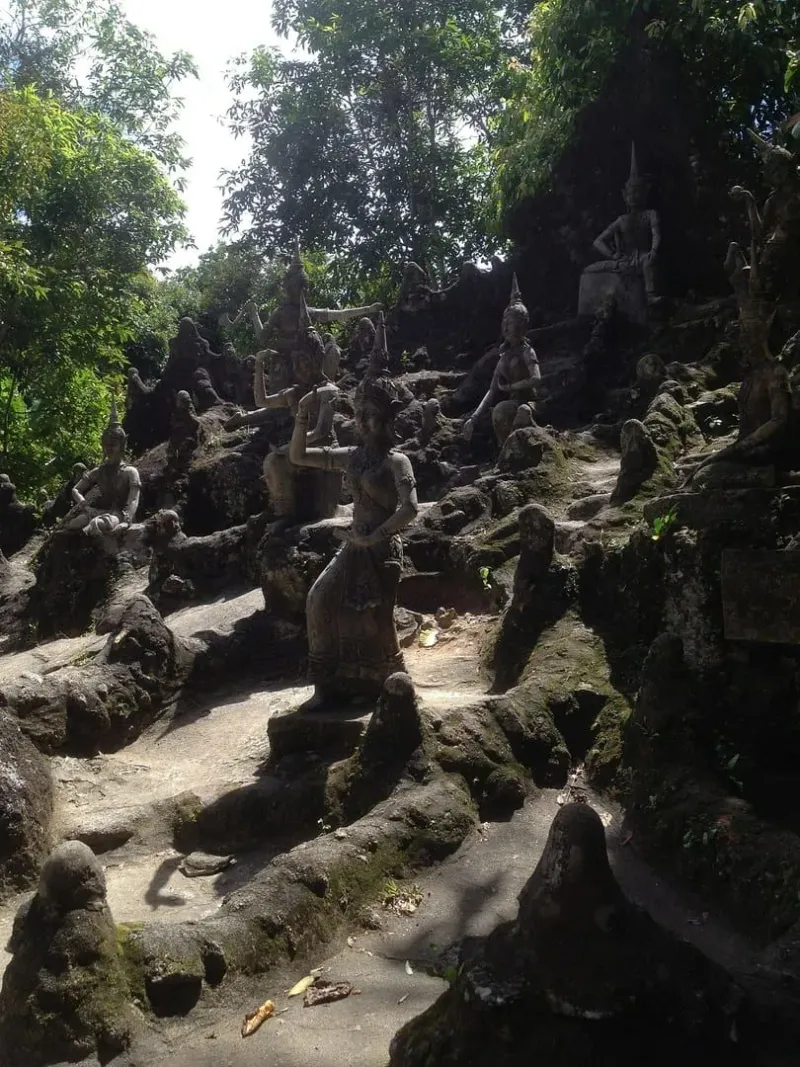
The most famous area is the “Angel Amphitheater,” where a group of graceful celestial beings are depicted playing traditional Thai musical instruments. These statues, now covered in a soft layer of green moss, appear to be frozen in a permanent heavenly performance.
Animals and Folklore
Beyond the deities, the garden is filled with statues of monkeys, snakes, frogs, and birds. Each animal has a specific meaning in Thai folklore or Buddhist parables. Look for the hidden musicians tucked under rock overhangs and the stern-faced guardians that protect the stream’s entrance.
Personal Tributes
Nim also included statues of himself, his father, and his grandparents, integrating his own family history into the spiritual landscape of the garden.
The 'Angel Amphitheater' features statues of celestial beings playing traditional Thai instruments.
The Tarnim Stream: A Natural Water Sanctuary
The garden is built around the Namtok Tar Nim, a small freshwater stream that tumbles down the mountainside.
Miniature Waterfalls: The stream creates a series of small falls and pools that provide a constant, cooling mist and a peaceful soundtrack of rushing water.
Spirit Houses: Scattered along the banks are small, mossy stone huts. Nim originally built these to provide shelter for traveling monks who wished to meditate by the water.
Cooler Climate: Because of the altitude and the dense canopy, the temperature in the garden is often several degrees cooler than at sea level, making it a perfect escape from the midday heat.
Activities: Exploration and Photography
Discover Hidden Figures: Many of the smaller statues are tucked away in crevices or behind large trees. The garden rewards those who take their time and look closely.
Macro Photography: The contrast of weathered stone, vibrant green moss, and the dappled sunlight through the leaves makes this a world-class location for photographers.
Meditation: Find a stone bench near the lower falls. It is one of the few places on the island where you can enjoy near-absolute silence, broken only by nature.
The Namtok Tar Nim stream flows through the heart of the garden, creating a cool and serene environment.
Food and Drinks
A small drinks stall near the entrance sells water and snacks, and there is little else on the mountain. Bring water and eat on the way: Hua Thanon and Na Muang on the south ring road have plenty of local restaurants, and our street food and seafood guide covers the fishing-village market at Hua Thanon.
Nearby Attractions
Since reaching the garden requires a trip into the interior, it is best combined with other mountain sites:
Tarnim Waterfall: the stream and cascades that run through the garden grounds.
Khao Yai Waterfall: a short-walk cascade with cool pools in the same Na Mueang interior.
Khao Pom summit trek: for experienced hikers, the island’s highest peak at 635 m, guide recommended.
Durian and Mangosteen Farms: plantations on the way up, the kind of farmland that made Nim Thongsuk a local figure.
Wat Khunaram (at the base of the hill): Visit the mummified monk before or after your mountain ascent.
Getting There: The Steep Mountain Climb
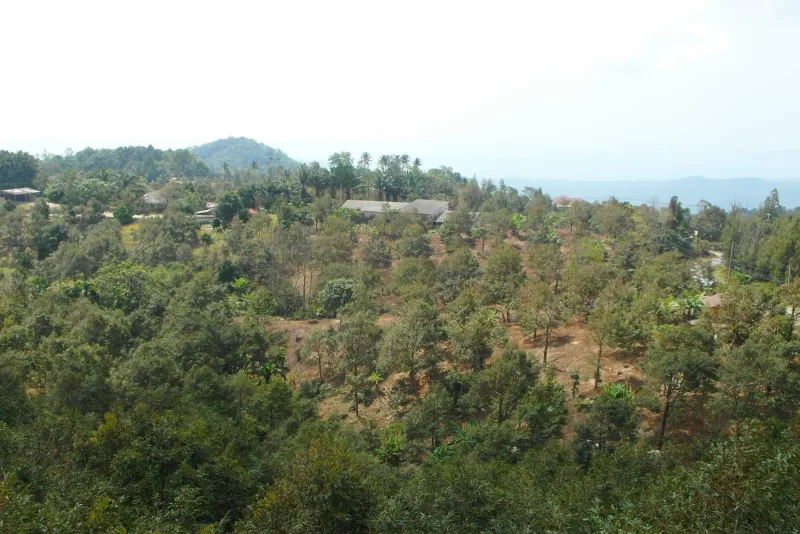
The garden sits on the flank of Pom Mountain, about 15-20 minutes by road from Lamai and 25-35 minutes from Chaweng or Nathon. The turn-off is on the southern ring road directly opposite Wat Khunaram: follow the signs for “Secret Garden” or “Magic Garden”.
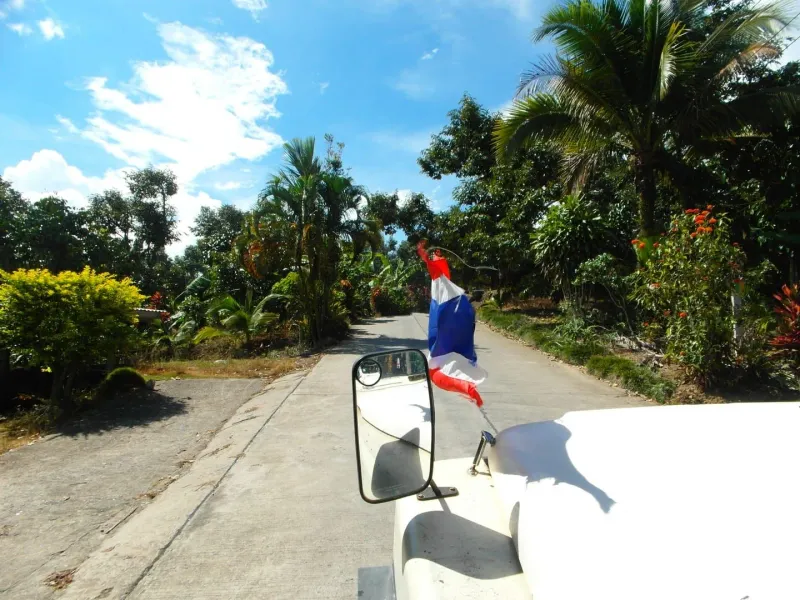
By 4x4 or jeep: the safest and most recommended way. The road is paved but extremely steep and winding.
By motorbike: only for highly experienced riders with excellent brakes. The descent is the hard part, so check your bike before starting down.
By tour: most jungle safari jeep tours include the garden as a main stop, the most popular way for visitors.
On foot: a 1-2 hour jungle trail leads up from near Route 4169, described in our Secret Buddha Garden trail guide. Fit hikers can also cross the whole ridge from the north on the Maenam to Magic Garden traverse, a hard 3-4 hour route that ends at the garden gate.
Best Time to Visit
Time
Experience
Rating
Opening - 10:00 AM
Quietest time; best light through the trees.
★★★★★
11:00 AM - 2:00 PM
Can get crowded with tour groups; air remains cool.
★★★
3:30 PM - 5:00 PM
Very peaceful; soft afternoon light on the moss.
★★★★
Pro Tip: Arrive at opening (between 8:00 and 9:00 AM depending on the listing). Tour groups tend to arrive from mid-morning, so early visitors often have the paths to themselves.
Practical Tips for Visitors
Wear Grip Shoes: The paths and steps are made of natural stone and can be very slippery, especially near the stream or after rain.
Insect Repellent: You are in the heart of the jungle. Mosquitoes are active here, especially in the shaded areas.
Bring Cash: The entry fee is cash only and goes toward upkeep of the garden.
Respect the Tomb: The final resting place of Nim and his wife is a sacred spot. Please keep your voice low and show respect when visiting.
Check Your Brakes: If you are driving yourself, do a quick brake check before starting the steep downhill drive back to the coast.
Who Is the Secret Buddha Garden Best For?
Traveler Type
Rating
Why?
Nature Lovers
★★★★★
An immersive jungle experience with unique flora.
Photographers
★★★★★
Incredible light, texture, and mystical subjects.
Adventure Seekers
★★★★
The drive up the mountain is an adventure in itself.
Artists
★★★★
Highly inspiring environment for sketching or writing.
Secret Buddha Garden: A mystical jungle haven created by the vision of one man.
FAQ
What is the difference between Secret Buddha Garden and Magic Garden?
They are the same place! The site is known by several names, including Secret Buddha Garden, Tarnim Magic Garden, and sometimes Heaven’s Garden.
What are the opening hours of the Secret Buddha Garden?
Roughly 8:00 AM to 5:00 PM daily on most listings, although some sources give 9:00 AM to 6:00 PM. Arrive at opening for the quietest paths and confirm locally, especially in the rainy season.
How do I get to the Secret Buddha Garden?
Take the southern ring road to the junction opposite Wat Khunaram and follow the signs up Pom Mountain. A 4x4 or jeep tour is safest on the steep road; fit hikers can walk up by the jungle trail, which takes 1-2 hours.
Is it suitable for the elderly or those with limited mobility?
No. The garden features steep, uneven stone steps and narrow paths that can be slippery. It requires a reasonable level of physical fitness and balance to explore fully.
Can I drive a normal car to the garden?
It is not recommended. While the road is mostly paved, it is incredibly steep. A 4x4 vehicle is much safer and more capable of handling the mountain conditions.
How much does it cost to enter?
The entrance fee is typically around 80 Thai Baht (approx. 2.50 USD) for foreign adults, paid in cash; some listings quote up to 100-150 THB. It is used for the upkeep of the private grounds.
Is there a lot of walking involved?
The garden itself is relatively compact, but exploring all the statues involves about 20-30 minutes of walking up and down stairs and sloping paths.
Travel photographer and island explorer. Mike has spent years documenting Southeast Asia's hidden gems, from secluded beaches to jungle waterfalls.
When to go
The temple calendar
Which day to come
Every day of the week carries its own Buddha posture, and this temple's own festival dates are set out beside it, or the general holy-day rule where it keeps none of its own.
SundayStanding in contemplation
MondayCalming the ocean
TuesdayReclining
WednesdayHolding the alms bowl
Wednesday nightRetreat into the forest
ThursdaySeated in meditation
FridayHands crossed at the chest
SaturdayShielded by the nagaToday
Festivals here
No festival of its own
Wan Phra
Wan Phra, the Buddhist holy day, falls on the new moon, the first-quarter moon, the full moon and the last-quarter moon, roughly every seven to eight days, never on a fixed weekday.
Only the etiquette that applies at this temple, drawn from the island's general rules and narrowed to match its own shoes, dress, fee and quiet requirements.
Cover shoulders and knees
Shoulders and knees stay covered inside every temple, no matter how hot the day, for women and men alike.
Mind your feet
Never point your feet at a Buddha image or a monk; tuck them behind you if you sit on the floor.
Nothing above the Buddha
Never touch a monk's head, and don't reach for anything above a seated Buddha image either.
Women and monks
Women never touch a monk or hand him anything directly; use a cloth or set the item down instead.
Ask before photographing
Ask before photographing a monk up close, and skip the flash and the selfie stick inside a prayer hall.
Keep your voice down
Keep your voice low and your phone silent inside any hall where people are praying or meditating.
Nearby Places
Just past the gate
What's within reach
The nearest beach, temple, waterfall and trail from this gate, each with its real distance and true direction, for whatever comes after this stop.