Every other temple sits at its true compass bearing, but is drawn at the square root of its real distance so nearby neighbours don't collapse into one point; the range rings carry the actual kilometres.
The figures, symbols and buildings recorded at this temple, grouped by what they are rather than where they stand, linked back to the glossary wherever a card already explains them.
Wat Nara Charoen Suk (วัดนราเจริญสุข) is a peaceful and deeply authentic Buddhist temple nestled in the tranquil Lipa Noi region of Koh Samui’s west coast. While the island’s eastern side is defined by high-energy tourism, the western shores retain a slower, more traditional pace of life. This temple is a primary reflection of that “Old Samui” spirit: a place where the community gathers for merit-making, festivals, and the quiet rhythms of spiritual practice.
The temple is best known for its unusual architectural features, most notably a tall, slender tower integrated directly into the facade of its main ordination hall. Surrounded by ancient trees and guarded by intricately carved dragons, Wat Nara Charoen Suk offers a serene environment for those looking to escape the crowds and experience the genuine heart of Samui’s local culture. Whether you are catching a ferry from the nearby terminal or exploring the island’s quieter backroads, this temple provides a meaningful connection to the local way of life.
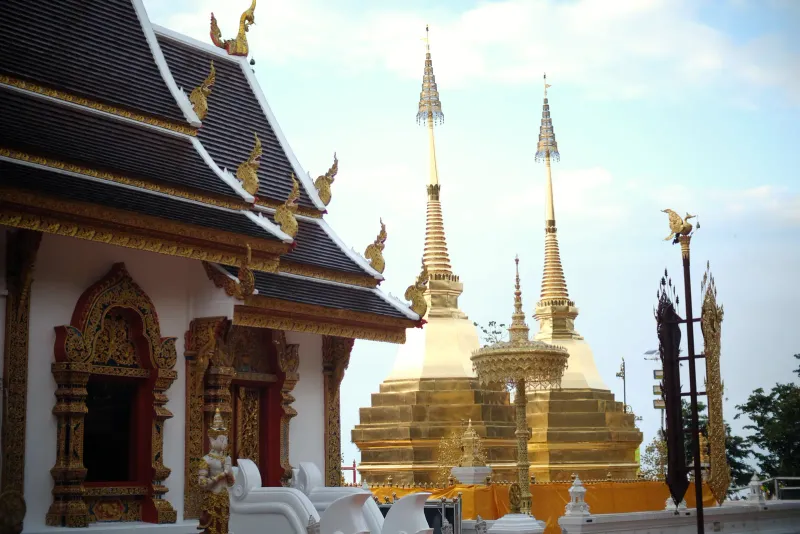
Golden chedi spires against a tropical sky on Koh Samui: illustrative of the tower-and-facade style local temples share.
History: The Spiritual Anchor of Lipa Noi
Wat Nara Charoen Suk has served the people of the Lipa Noi and southern Nathon areas for generations. It is not a royal temple, but rather a “people’s temple,” funded and built by local families. Historically, it has been led by several highly respected abbots whose wisdom and leadership were vital to the island’s development during its early agricultural years.
Today, the temple remains a pillar of the community. It is the primary site for local merit-making ceremonies, traditional Thai weddings, and funerals. The temple also plays a significant role in Samui’s annual Chak Phra Festival in October, where it contributes an elaborately decorated float that processes through the streets of Nathon, carrying a sacred Buddha image.
The Unique Tower Facade
The defining architectural feature of Wat Nara Charoen Suk is its facade tower. Unlike most Thai temples where the Chedi (stupa) is a separate structure located elsewhere on the grounds, this temple has a tall, tapering spire built directly onto the front of the ordination hall (Ubosot).
This design is somewhat unusual for Koh Samui and gives the building a distinctively vertical and imposing character. The white walls of the tower are often decorated with golden accents, representing the transition from the earthly realm to the spiritual height of enlightenment.
Dragon Sculptures and Guardians
As you explore the shaded grounds, you will notice the exceptional level of detail in the temple’s decorative elements.
Intricate Nagas: The staircases leading into the main halls are flanked by magnificent Nagas (mythical serpents). These creatures are beautifully painted in vibrant greens, golds, and reds, their bodies coiling gracefully along the banisters.
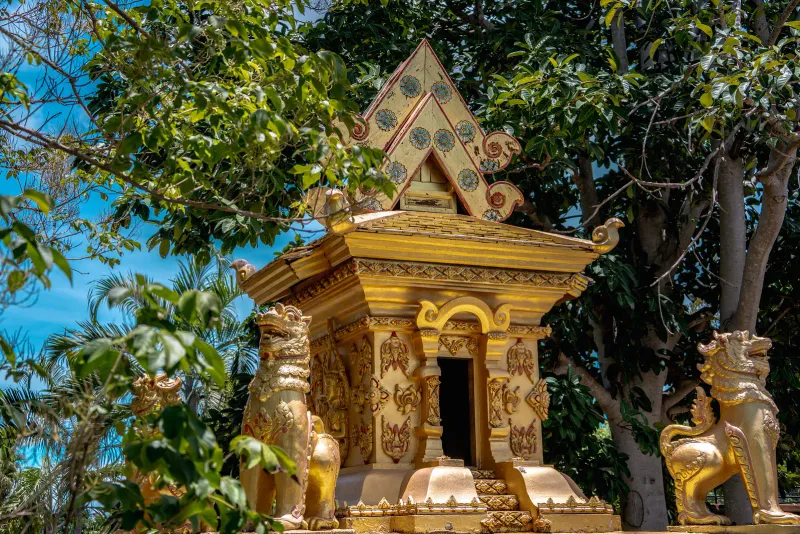
Spirit Houses: The grounds feature several well-maintained spirit houses, where locals leave offerings of incense and flowers to honor the resident spirits of the land.
Ancient Trees: The temple is built under the canopy of massive, old-growth trees. These provide not only shade but also a powerful sense of natural continuity, making the site feel much cooler and more contemplative than the open coastal areas.
A golden spirit-house shrine guarded by lion statues, illustrative of the small shrines found on Samui temple grounds.
Activities: Meditation and Merit-Making
A visit to Wat Nara Charoen Suk is less about “ticking off” a sight and more about soaking in the atmosphere.
Observe Local Rituals: Visit in the early morning (around 8:00 AM) to see the monks receiving alms or performing their daily chants.
Silent Reflection: Find a quiet spot under the trees. The temple receives very few tourists, making it one of the best places on the island for uninterrupted meditation or reading.
Make Merit: You can purchase incense, candles, and lotus flowers at the small shrine area to make your own offering.
Architecture Photography: The unique tower facade and the interplay of shadows through the jungle canopy provide excellent opportunities for photography.
Where to Eat: Lipa Noi Flavors
Lipa Noi is known for its relaxed beachfront restaurants and authentic local shophouses.
Restaurant
Style
Recommendation
Distance
Lipa Noi Night Market
Street Food
Grilled Seafood
5 min drive
Think & Retro
Relaxed / Eclectic
Fresh Juices / Thai
8 min drive
Local Duck Rice
Traditional
Roasted Duck
3 min drive
Air Bar
Upscale / Views
Sunset Cocktails
10 min drive
Nearby Attractions
Wat Nara Charoen Suk is ideally located for exploring the West Coast:
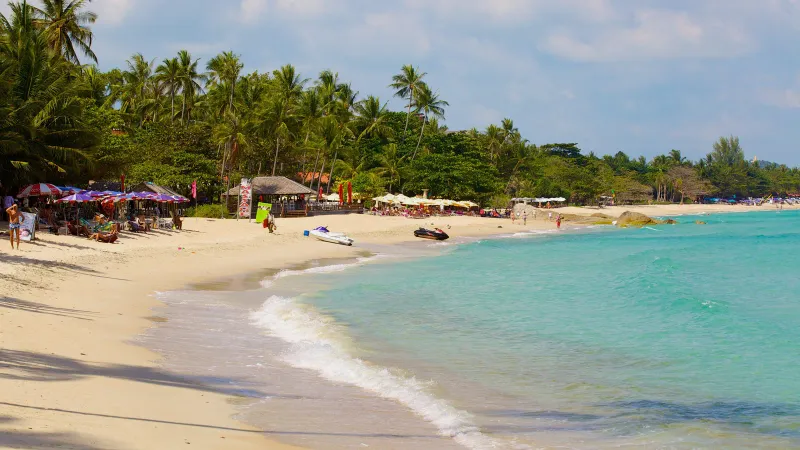
Lipa Noi Beach: A beautiful, quiet beach with white sand and calm, shallow water.
Raja Ferry Terminal: The primary ferry link to the mainland (Don Sak).
Nathon Town (15 min drive): The island’s capital, perfect for shopping and the Saturday night market.
Wat Khao Chedi (10 min drive): A hilltop temple offering panoramic views of the western coast.
Getting There: The West Coast Backroads
The temple is located on Nara - Taling Ngam Road, about 6 kilometers south of Nathon town.
By Motorbike: This is the best way to reach the temple. From Nathon, follow the Ring Road south and turn toward the coast following the signs for Lipa Noi or Raja Ferry. The backroads here pass through beautiful coconut plantations.
By Car: The roads are well-paved but narrower than the main Ring Road. Follow GPS coordinates for “Wat Nara Charoen Suk.”
By Songthaew: You can take a songthaew from Nathon toward Taling Ngam and ask to be dropped at the “Wat Nara” turn-off.
Best Time to Visit
The temple is open daily from sunrise to sunset.
Time
Experience
Rating
8:00 AM - 10:00 AM
Cool air; best light through the trees; active monastic life.
★★★★★
11:00 AM - 3:00 PM
Shaded and cool, a good escape from the coastal heat.
★★★★
4:30 PM - Sunset
Soft lighting; very peaceful as the day ends.
★★★★
Practical Tips for Visitors
Dress Modestly: This is a traditional community temple. Ensure shoulders and knees are covered.
Remove Shoes: Always take your shoes off before entering any temple building.
Stay Hydrated: While the grounds are shaded, the Samui humidity can be high. Bring a bottle of water.
Respect Silence: The monks and local residents value the tranquility of the site. Please keep your voice low.
Donations: Look for the small donation boxes. Your contribution helps maintain the intricate statues and supports the temple’s community work.
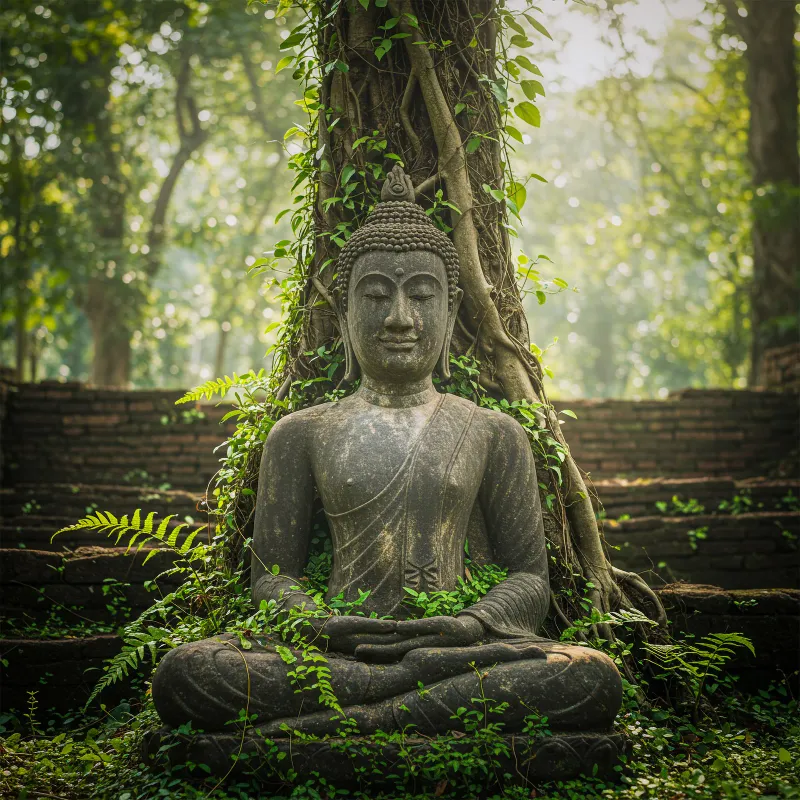
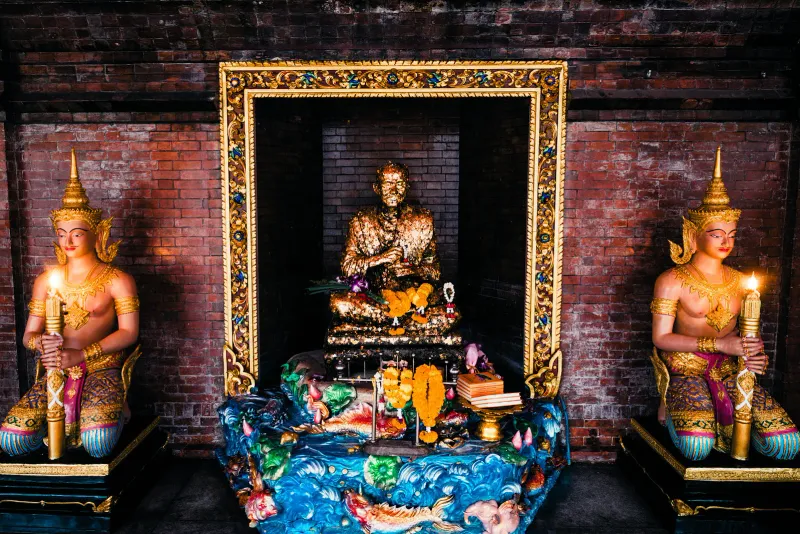
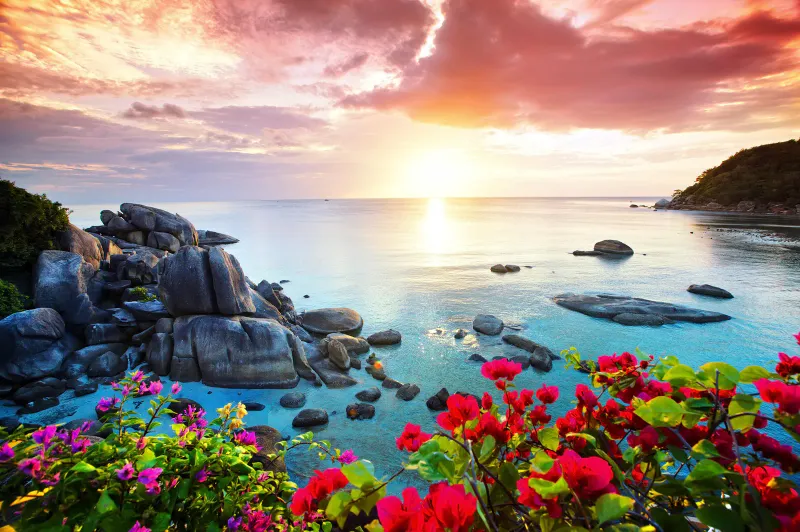
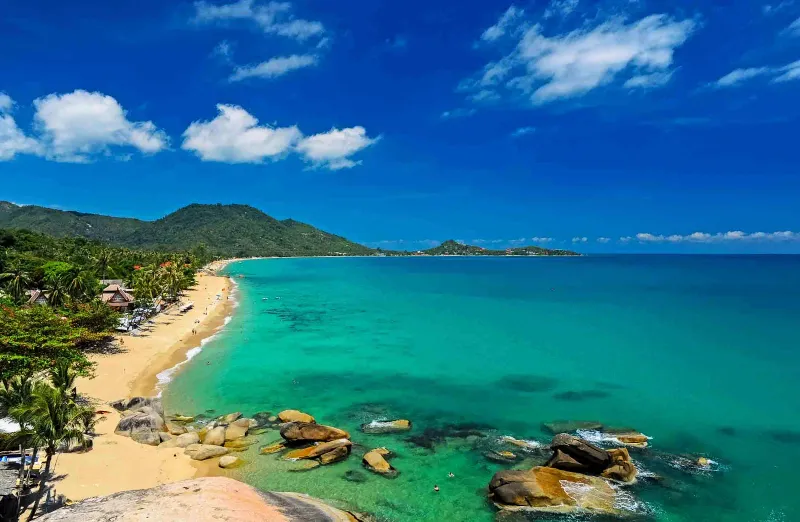
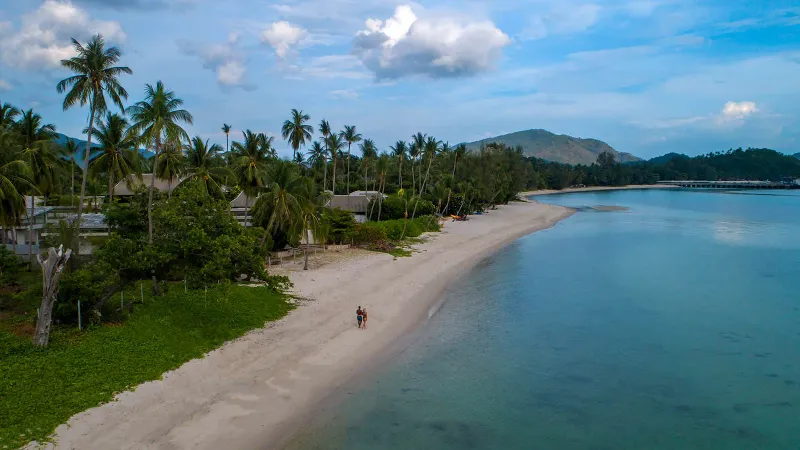
Generic Thai temple and shrine imagery, and views of Wat Nara Charoen Suk itself in Lipa Noi.
Who Is Wat Nara Charoen Suk Best For?
Traveler Type
Rating
Why?
Culture Seekers
★★★★★
One of the most authentic community-focused sites on Samui.
Slow Travelers
★★★★★
A perfect place to slow down and experience the island’s quiet side.
Photographers
★★★★
Unique tower architecture and detailed mythical sculptures.
Introverts
★★★★★
Almost zero crowds and a very meditative environment.
FAQ
Is there an entry fee for Wat Nara Charoen Suk?
No, entry is completely free. Small donations are welcomed to help with the upkeep of the buildings and the grounds.
How does it differ from other temples?
The most unique feature is the “Facade Tower”: a tall pagoda-like spire built directly into the front of the ordination hall, which is rare for temples on the island.
Is it easy to reach from Lipa Noi Beach?
Yes, it is about a 5-10 minute drive or a 20-minute walk from most parts of Lipa Noi Beach.
Can I see any festivals here?
The temple is a major participant in the annual Chak Phra Festival in October. During this time, the temple is filled with activity as the community prepares its ceremonial float.
Is it suitable for children?
Yes, children are welcome. They will enjoy the colorful dragon statues and the large, open grounds, though they should be encouraged to remain quiet and respectful.
Freelance writer and Koh Samui resident since 2019. Migues covers local culture, food, and the best off-the-beaten-path destinations on the island.
When to go
The temple calendar
Which day to come
Every day of the week carries its own Buddha posture, and this temple's own festival dates are set out beside it, or the general holy-day rule where it keeps none of its own.
SundayStanding in contemplation
MondayCalming the ocean
TuesdayReclining
WednesdayHolding the alms bowl
Wednesday nightRetreat into the forest
ThursdaySeated in meditation
FridayHands crossed at the chest
SaturdayShielded by the nagaToday
Festivals here
Chak PhraDate not yet published
Wan Phra
Wan Phra, the Buddhist holy day, falls on the new moon, the first-quarter moon, the full moon and the last-quarter moon, roughly every seven to eight days, never on a fixed weekday.
Only the etiquette that applies at this temple, drawn from the island's general rules and narrowed to match its own shoes, dress, fee and quiet requirements.
Cover shoulders and knees
Shoulders and knees stay covered inside every temple, no matter how hot the day, for women and men alike.
Take off your shoes
Shoes and sandals come off before stepping into any hall with a Buddha image, no exceptions.
Mind your feet
Never point your feet at a Buddha image or a monk; tuck them behind you if you sit on the floor.
Nothing above the Buddha
Never touch a monk's head, and don't reach for anything above a seated Buddha image either.
Women and monks
Women never touch a monk or hand him anything directly; use a cloth or set the item down instead.
Ask before photographing
Ask before photographing a monk up close, and skip the flash and the selfie stick inside a prayer hall.
Keep your voice down
Keep your voice low and your phone silent inside any hall where people are praying or meditating.
Nearby Places
Just past the gate
What's within reach
The nearest beach, temple, waterfall and trail from this gate, each with its real distance and true direction, for whatever comes after this stop.